
The school day was over and even the evening's sports practices and other extra-curricular activities were winding down, as a small group of adults began congregating after 6 p.m. in Wauwatosa East High School's cafeteria, around tables set up for the occasion.
The group of about 30 people was a mix of parents of school-age children, civically engaged taxpayers and some old enough to have grandchildren at Tosa East. They were welcomed to the Oct. 22 session by school staff, district administrators and four members of Wauwatosa's seven-person school board.
A majority of the current school board was elected to their first terms in April, and Liz Heimerl-Rolland, a senior member who was elected to her three-year term in 2023, opened this school board engagement session by explaining it fulfilled one of the current board's goals for itself.
"One of the main things we wanted to do was have more opportunities to engage with the community," Heimerl-Rolland said. A second board engagement session is planned for 6 p.m. Nov. 12 at Wauwatosa East High School, and the board hopes to continue holding periodic sessions throughout the term.
And unlike the typical school board meeting, which follows a strict agenda that allows for only limited time for community input, the engagement session at Tosa East across more than 90 minutes incorporated several forms of feedback and interaction between the board and the community it serves.
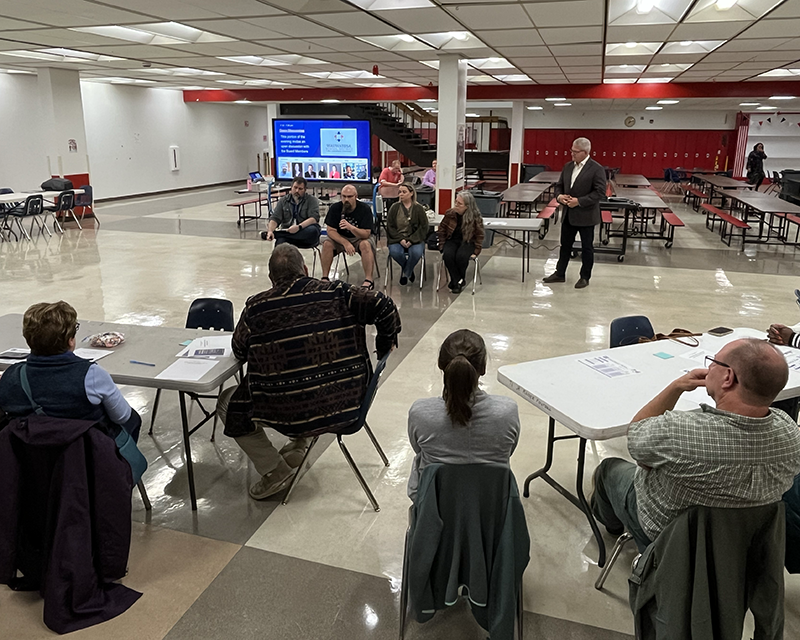
Damian LaCroix, who retired last year as superintendent of the Howard-Suamico School District in the Green Bay area, facilitated the evening's discussions. He began by inviting attendees to submit answers through their phones to two overarching question: What is going well with Tosa schools, and what is something that could go better?
Participants' digital responses appeared on a screen behind LaCroix in real time.
Some examples of what is going well, they said, are the school district's arts programs, its new cellphone policy, its multiethnic parent association, its class sizes, community support, PTA involvement, high school athletics and the dedicated staff.
On the screen, Jeff Peterson, principal of Lincoln Elementary School, received a personalized shoutout from one participant. "Principal Peterson is amazing," it read.
And what could be better? More tutoring, support for special education students, disparities in academic outcomes, more efficient use of taxpayer dollars, more African American staff, less screen time for young students, better grading systems, building upgrades, career and technical education, shorter lunch lines and cleaner microwaves were among the many responses.
If it wanted to, the school district could probably fill separate community meetings on any one of those individual topics — with the possible exception of the microwaves — but at this meeting, the exercise seemed more intended to get participants thinking about their community's schools and what it might mean to move from present reality to future hopes.
The school board plays a crucial role — but at the level of policy rather than management, Lynne Woehrle, the school board president, said in a brief presentation about the board's approach to such issues.
It is a "policy governing board," she said. The board enacts the district's policy. The staff carries out those policies in their daily work operating the schools. Oversight of that work is provided by the superintendent, who reports back to the school board.
"We do a lot of listening and synthesizing," Woehrle said, and the board is responsible for ensuring the district has coherent policies that align with its stated vision: to ensure an exceptional and equitable learning experience for all.
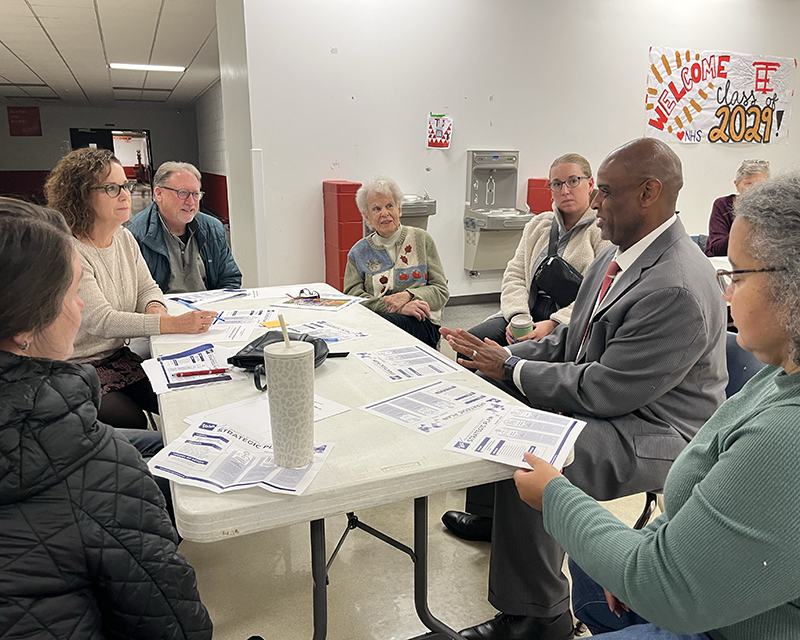
For the next half hour or so, the board members interacted with session attendees in small table groups about what they felt should be the district's priorities.
Superintendent Demond Means joined one of the table discussions, and the topic quickly turned to the district's stewardship of tax dollars, the purpose and status of several past tax referendums and the prospect of an additional referendum to come for additional school upgrades.

Support our sponsors
"Communication needs to be better, we can all agree on that," one woman told Means.
Some participants came with specific examples, from the 2018 referendum that paid to rebuild four elementary schools and two measures from 2024 intended to catch up on additional maintenance and upgrades and to fill a operational budget gap.
Means, who was hired by the district in 2021, noted that neither he nor the current school board were in office when some of those original decisions were made, though he affirmed the district's long-term facility needs, which are expected to only grow more expensive with time if unaddressed.
After an extended discussion about those and other budget concerns, Means excused himself from the table to join one of the other discussions. "I appreciate the feedback," he said.
Heimerl-Rolland soon joined the discussion at the table Means had just left. She tried answering questions about specific budgetary issues, and given their concerns about the district's communications, she asked them for any suggestions for improvements.
"How do we reach community members, especially those who don't have students?" she said.
Mailings and social media were suggested. The district's website also contains a lot of information, Heimerl-Rolland added.
The evening concluded with a brief question-and-answer session with the four attending board members: Woehrle, Heimerl-Rolland, Jason Wautier and Christopher Bauer.
Questions ranged from how to improve tutoring support for athletes to the district's proposed shift to an integrated math program. The board members also were asked about policies enacted by the Wisconsin Legislature that have decreased financial support for districts while making it more difficult for districts to raise the money they need locally.
Bauer's response was straightforward. Talk to your state representatives, he said.
Before closing the session, Bauer provided a brief snapshot of what to expect next. The board will collect the input received at this meeting, which will help it plan the Nov. 12 meeting at Tosa West. Both meetings will help guide the board's future policy decisions, and the board hopes to develop a regular schedule of additional community engagement sessions into the new year.


