
A large committee of parents and other residents, formed this year by the Wauwatosa School District to consider the future of the district's middle and high schools, has narrowed 10 proposals under consideration down to five. Each of those options would mean dramatic changes for Wauwatosa's educational facilities and likely would require a significant voter referendum to pay for the changes.
Which proposal advances next year may depend on how the committee, school board and community answer a few central questions.
Should Wauwatosa combine its four middle schools and high schools into two 7-12 campuses, one on the east side and the other on the west side? Should the district close Tosa East to and move those students into an expanded campus at Longfellow Middle School? Should it it expand Tosa West to create a large citywide high school and turn Tosa East into a citywide middle school, an option that could require busing?
Or should Wauwatosa maintain its educational footprint mostly as it is now, with four secondary schools in four locations, while spending millions to catch up on expensive deferred maintenance and educational upgrades?
"There are tradeoffs," Will Gilbert, a committee member representing Longfellow parents, said at the Sept. 30 meeting of what is known as Secondary Schools Ad Hoc Committee. Gilbert advocated keeping all four secondary schools open and upgrading them while closing and selling the Fisher Administrative Building as a way to save money and reduce the district's facilities footprint. That option ultimately was among the five favored by the committee, partly because it would be the least disruptive for families.
(Further details about the five options are outlined below, in the second half of this article.)
"If we start with what the community really wants and try to get there, that's going to be the best outcome for everybody in the end," Gilbert said.
The committee's two dozen members, most of them with children in at least one of the district's 14 schools, are expected to make their final recommendation early next year, after which the Wauwatosa School Board is planning to launch a community engagement phase to collect additional feedback on the option they recommend.
Since the committee was appointed in May, its members have toured the district's four secondary schools as well as schools in several other districts around Wisconsin to compare different educational facility models. They also heard presentations last month from Wauwatosa School District department heads offering their recommendations based on a variety of factors, including maintenance advantages, staffing efficiencies, students' social-emotional learning, academic benefits and budget impact.
Some members have said they can't ignore that Wauwatosa voters may be feeling referendum “fatigue.” A $125 million capital referendum passed in 2018 allowing the district to rebuild four elementary schools and make more modest improvements to other buildings. Then in November 2024, voters endorsed both a $60 million capital referendum and a $64.4 million operational referendum. The most recent capital referendum was only intended to address deferred maintenance at the district’s elementary schools and accessibility at all schools.
What if Tosa voters decide they don't want to spend any more money improving schools? One of the options considered by the committee would invest zero dollars in modernizing Tosa's middle and high schools. In effect, it is the "do nothing" option, yet the district says there is no true "do nothing" option. It will need to spend at least $150 million simply to catch up on the deferred maintenance at the secondary schools.
On Sept. 30, the committee worked with a consultant on a exercise that rated the seven models developed by the school district and three additional proposals introduced by members. The zero modernizaiton option received some of the lowest scores of the 10 proposals.
By choosing five other favorites, the committee will now work with district officials on a survey that will collect input from residents to help guide the committee's discussions for the rest of the year as they narrow those options down further to one finalist.
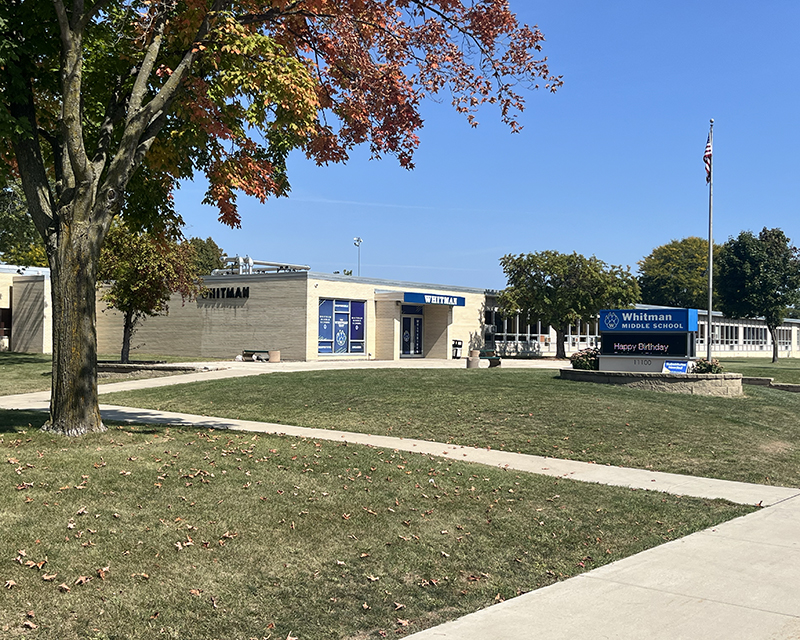
Throughout the process, Superintendent Demond Means has urged the committee to keep one "essential question" in mind: “Which secondary school facility model best equips WSD to implement and sustain an efficient and impactful instructional program?”
In a written statement to Tosa Forward News for this story, Means affirmed that the committee has been "empowered to develop its own independent recommendation" and that the district is filling a support role, to "inform and facilitate options, ensuring that community voices continue to guide the path forward."
"While the district has provided extensive background data and technical support, ownership of this work now rests with the committee itself," Means said. "We are deeply appreciative of the time, expertise, and thoughtful engagement these citizens bring to this important endeavor."
The following are summaries of the five options that the committee indicated it favored during a collective voting process at its Sept. 30 meeting. Additional information is available on the school district's website.
Combine middle and high schools, at East and at West
Under this option, Longfellow and Whitman middle schools would both close. Tosa East and Tosa West would expand to accommodate the former middle schools' seventh and eighth grades, but those grades would be separated from the older grades, maintaining the gradual transition to high school. (The district already is planning to move its sixth-graders into the elementary schools.)
The estimated cost of such a project is a little more than $350 million, and as with the other four options, it would fully catch up with the district's deferred maintenance at its existing buildings. One of the primary benefit of this option is it also anticipates operational savings of $1.5 million a year, because combining the middle and high schools would require the equivalent of 31.5 fewer full-time positions.
"The most fiscally responsible operating model is a reduction in our facility footprint which will allow us to generate savings in maintenance, personnel, utilities and other areas," the district's Division of Finance and Operations said in a presentation to the secondary schools committee, though it recommended a different way of reducing that footprint.
One citywide high school at West, middle school at East
Finance and Operations backs "a comprehensive high school on the West site, renovating Longfellow as a comprehensive middle/junior high school, and closing Whitman, East, and Fisher."
Creating a single citywide high school is arguably be the most innovative and dramatic proposed change to Tosa's secondary school structure, and though it isn't clear whether the community would get behind such an idea, it has the support of several school district departments.
Under this option, the school district would turn Tosa East into a citywide middle school (not Longfellow, as favored by Finance and Operations). It would spend an estimated $344 million to modernize and expand Tosa West to accommodate all city students in grades 9-12 while moving all seventh- and eighth-graders into the middle school conversion at Tosa East.
This could save nearly $1.8 million a year in staffing costs, but the district estimates it also would need to budget about $2.5 million a year for transportation, presuming it would begin busing students who live on the other side of the city from their new middle or high school.
This model would offer advantages for staffing and academic programs, though the district's Division of Pupil and Family Supports advised against it because the prospect of a high school with more than 2,000 students raises red flags for students' social-emotional well-being.
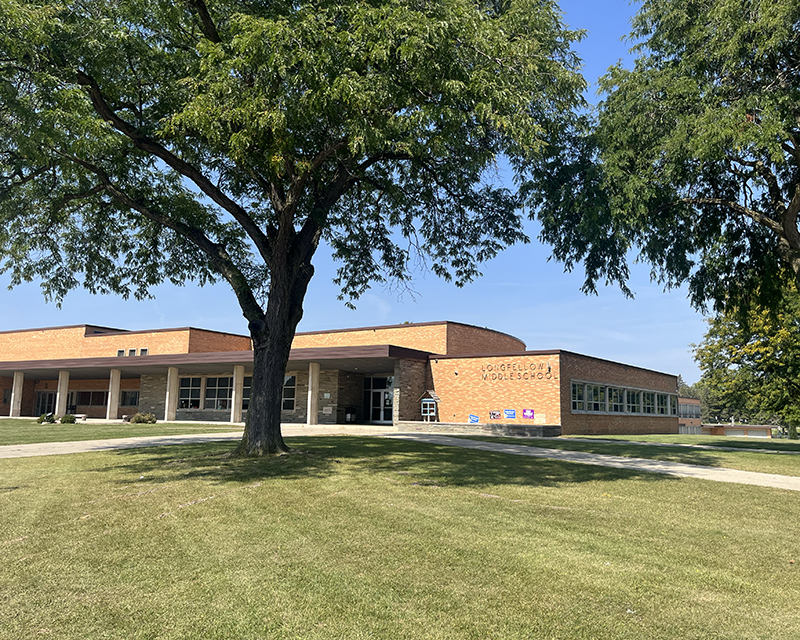
Combine middle and high schools, at Longfellow and at West
This was not one of the original seven options offered for consideration, but Edward Brennan, one of four committee members without students in Tosa's schools, introduced it Sept. 30 as one of three additional options developed by the committee.
"We need to maintain the East-West division of the schools," Brennan said, but he argued that the property at Longfellow has much more potential for expansion than Wauwatosa East High School, which is the city's oldest secondary school dating to 1931. Tosa East also is the building that would require the most expensive investment to address deferred maintenance.
Brennan's proposal would close Whitman, combining the west-side schools at Tosa West. He emphasized that demographic projections indicate the recent trend of decreasing admissions will continue, putting greater pressure on the district to close buildings.
"East High School has probably outlived its usefulness," Brennan said, though he suggested preserving the school's modern pool and possibly other recreational facilities on the campus.
Keep four SECONDARY schools, renovated and modernized
Pupil and Family Supports recommended this model, which would maintain all four secondary schools while spending an estimated $322 million to modernize them and catch up on all deferred maintenance.
"Research strongly favors maintaining right-sized schools (400–1,200
students) with modernized facilities to best support students’ social and emotional
development," Luke Pinion, chief of Pupil and Family Supports, said in his report.
Tosa East and Tosa West would accommodate about 1,000 students each, while enrollment at Longfellow and Whitman would be expected to total 450 to 500.
This option, however, would not realize the same operational savings as the options combining the middle and high schools. It wouldn't require closing any buildings, which could appeal to families used to sending their children to these schools, but it also wouldn't bring the financial benefits of reducing the district's facilities' footprint.
Keep and modernize four schools, and close Fisher Building
To address that last point, Gilbert propose this option, a slight modification of the four secondary schools model. It would pursue the same modernization and renovations of the existing schools while also closing the Fisher Administrative Building on West North Avenue, which currently also houses the Wauwatosa Montessori School.
Gilbert said a plan for the Montessori School would still need to be worked out, possibly moving it into Whitman Middle School or another existing building with extra space.
The district would be able to keep the Breitlow sports fields that are on a separate parcel adjacent to the Fisher building, which could be sold for further financial benefit to the district.
- David Paulsen, a Tosa East Towne resident and editor of Tosa Forward News, has more than 25 years of experience as a professional journalist. He can be reached at editor@tosanews.com.


