
Intense rainstorms. Record accumulation. Withering humidity. And temperatures that were exceedingly — normal?
It was an interesting summer for weather in and around Wauwatosa, even before the historic rain and flooding Aug. 9 and 10 that helped pushed the season into the record books.
Meteorologists measure seasonal weather trends by calendar months instead of astronomical solstices and equinoxes, so as we approach the end of meteorological summer on Aug. 31, Tosa Forward News is sizing up the past three months, tallying weather statistics both extreme and conventional.
One obvious extreme was the rainfall. An estimated 7 inches fell on Wauwatosa in one 24-hour period overnight Aug. 9 as part of a storm system that caused widespread flooding in the Milwaukee area. That rainfall figure is based on rain gauges monitored by the Milwaukee Metropolitan Sewerage District.
The National Weather Service does not have an observation station in Wauwatosa, but it has tracked rainfall in neighboring West Allis since 1948. In nearly 80 years of record-keeping there, more rain fell in summer 2025, a total of 20 inches, than in any previous summer.
"That's a hefty total," Mark Gehring, a meteorologist with the National Weather Service's Milwaukee-Sullivan office, told Tosa Forward News in a phone interview.
Normal summer rainfall is just under 13 inches. West Allis (and presumably Tosa) was tracking close to normal for summer rainfall until the intense downpours this month.
This summer's daily accumulations include nine days when at least a half inch of rain fell. Gehring said the season's high humidity was likely a factor. It didn't necessarily cause more storms, but when storms formed, they tended to drop more rain.
“It’s been a humid summer, an unusually humid summer," Gehring said.
National Weather Service records also show there were 37 days this summer with at least a trace of rain accumulation, and a particularly rainy stretch in early July. Of the first 12 days of that month, only two were rain-free.
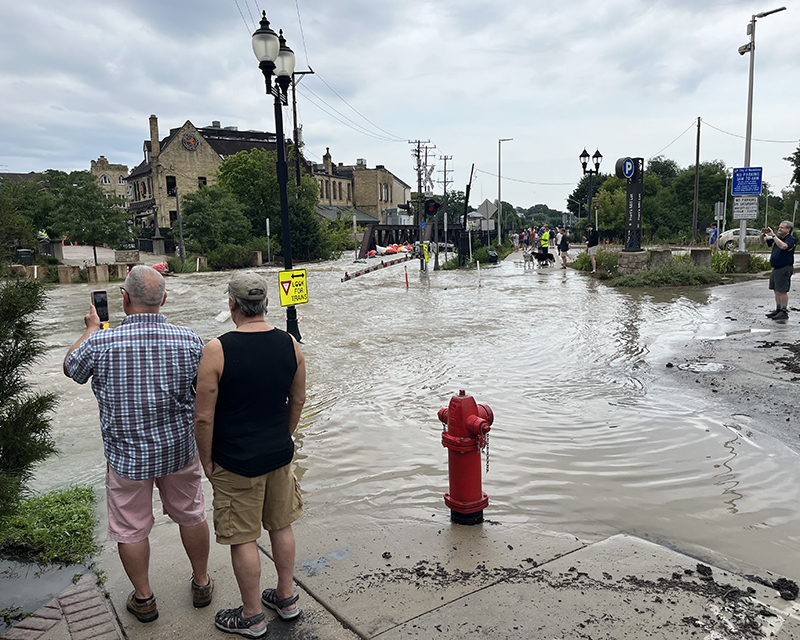
That hasn't stopped Tosans from enjoying the outdoors. The Tosa Farmers Market continued to open each Saturday morning in Tosa Village's Hart Mills Parking Lot — even on the Saturday one week after that parking lot was underwater from the flooded Menomonee River.
Tosa Tonight also had a successful summer of Wednesday night concerts at Hart Park, and when the August flooding prevented a return to the park's Rotary Stage, organizers were able to respond quickly by moving the series' final concert of the summer on Aug. 13 to Wisconsin Avenue Park.
"Thank goodness for flexible and willing local politicians, Wauwatosa and Milwaukee County Police, Milwaukee County Parks, the Tosa Tonight production crew including our stellar stage manager, our fans and our sponsors," the organizers said in a Facebook post. "Pulling this off seemed a miracle."
TOSA Pool at Hoyt Park also has had a successful summer. Despite closing the pool temporarily now and then in response to episodes of thunder and lightning, the pool was able to stay open nearly every day this season, Executive Director Elsa Knysak told Tosa Forward News. The only full closure was for the day after the Aug. 10 flooding because the swollen river had blocked access to the park's facilities. It did not damage the pool.
At other times this summer, on particularly hot weekend days, the pool reached capacity. Overall, the pool logged about 80,000 admissions this summer. It will continue to be open each day this weekend through Labor Day, Sept. 1.
"You can tell that the love and dedication to this place is palpable from the community," Knysak sad.
The nonprofit Friends of Hoyt Park & Pool, in addition to operating TOSA Pool, also manages the Landing beer garden. Knysak said turnout for both during the summer fluctuates with the weather. On hot days, more people are in the pool. On cooler days, the Landing tends to get increased business.
“It just shows how much buy-in the community has for this gem," she said, and this year will be the first in which the Landing will remain open through the winter, with seating moving into the Great Hall when the weather gets too cold for patrons to remain outside.
As for this summer's temperature trends, Gehring said they have followed rather closely to the region's norms. June and July were slightly above normal, with temperatures rising a few days into the 90s. Those temperatures have been offset somewhat by readings slightly below normal in August, especially in the past week.
"Now we’re getting a nice cool down," he said.


