
The City of Wauwatosa on Aug. 15 released its first public accounting of the staggering impact of last weekend's intense storms and historic flooding, with an estimated $9 million in damage to city-owned property, though the costs to residents of the damage to theiir private property likely will drive the total financial impact much higher.
The city's dispatch center received more than 350 calls for service on Aug. 9 and 10 during and after the storms dropped more than 7 inches of rain on Wauwatosa, and the Wauwatosa Fire Department responded to 123 service calls, according to the latest update. About 70 people and numerous pets were rescued from the floodwaters, including two people caught in the Menomonee River when it overflowed its banks.
More than 500 homes and 50 businesses were affected, according to initial estimates, and some of the greatest damage and most extensive losses were focused on the neighborhoods on either side of the Menomonee River Parkway north of Burleigh Street.
By sundown Aug. 14, the normally scenic parkway was dotted with piles of flood-damaged personal items, from kids toys to living room furniture, as well as other items collected in black garbage bags and loaded high. On one stretch of the parkway on the east side of the river, just south of Hartung Park, nearly every house showed that grim evidence of extensive flood damage.
Several residents were still working with remediation crews to pump out and sanitize formerly flooded basements. Others faced even direr scenarios because the floodwaters had risen as high as their first-floor living spaces. Many sat in front of their homes, on front porches or lawn chairs, and huddled together for conversational support and beers.
"It's going to be a bit of a long road to get back to 'normal,'" Brian Baxter told Tosa Forward News from the top of his front steps.
A remediation crew from Servepro was at work cleaning up the Baxters' garage and basement, both of which had taken on several feet of water. One of their cars was parked in the front yard, a slash line of river sludge at waist level giving evidence of how high the water had risen.
"Everything in the basement is gone," Baxter said, looking toward the massive pile of household items siting next to the end of his driveway. As expensive is it will be to replace most of those items, he and his wife have been thinking most about the irreplaceable keepsakes lost, such as a life's worth of Christmas ornaments.
"A lot of our history is out on the curb, and it's heartbreaking," he said.
But they are most relieved to have their family in tact and safe. Baxter and his wife were coming home from an overnight stay in Elkhart Lake last weekend and keeping in constant contact with their two teenage daughters still at home. The girls were among the residents taken to safety early Aug. 10 by Tosa fire crews with boats, to be reunited with their parents.
Next door to the Baxters, Allison Bednarski and her husband, Matt, sat in lawn chairs with two friends taking a break from the stress of moving their soggy possessions to the curb and assessing the damage. Like the Baxters, the floodwaters rose several feet in their basement while thankfully not reaching as high as their main living space.
Even so, Allison Bednarski said the flood caused major damage and ruined everything in the basement, and she fears the fine print of her home insurance might make it difficult to recoup the financial losses.
The City of Wauwatosa said Aug. 15 that its Department of Public Works had already collected about 250 tons of residential flood debris. Residents with flood damaged items anywhere in the city have been encouraged to place them on the curb for pickup, a process that for now will take the place of the city's yard waste pickup. The city expects the total tonnage to continue rise with as more residents clean out and crews pick up.
Property owners also are encouraged to report damage to the Milwaukee County Office of Emergency Management through 211 or the online damage report form. The city offers income-eligible residents assistance through a home repair program, though the greater source of relief may depend on the future authorization of state and federal assistance.
The Menomonee River runs like a lifeline through the center of Wauwatosa's municipal boundaries, from Hampton Avenue on the northern edge, through the city's midsection and then east parallel to State Street until it flows into Milwaukee and out to Lake Michigan. While normally a scenic landmark in this dense suburban enclave, the river can quickly turn turbulent with a good rain. Early Aug. 10 it rose about 13 feet in a few hours, reaching flood stage and immersing much of the adjacent public infrastructure and recreational facilities in Tosa Village and Hart Park.
Just as dramatic, but less publicly visible, was the river's infiltration of the otherwise tranquil northwest neighborhoods upstream from Tosa Village.
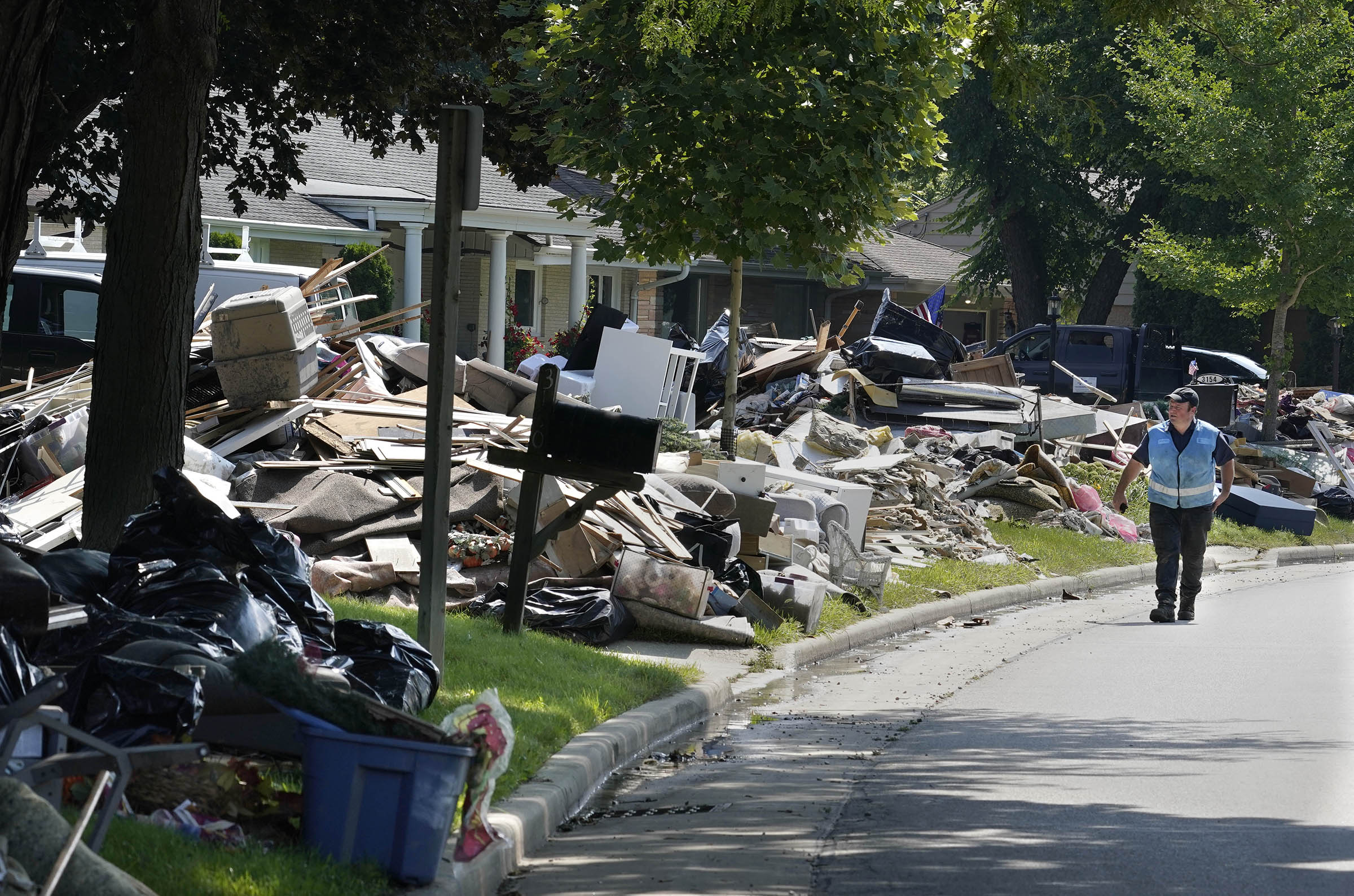
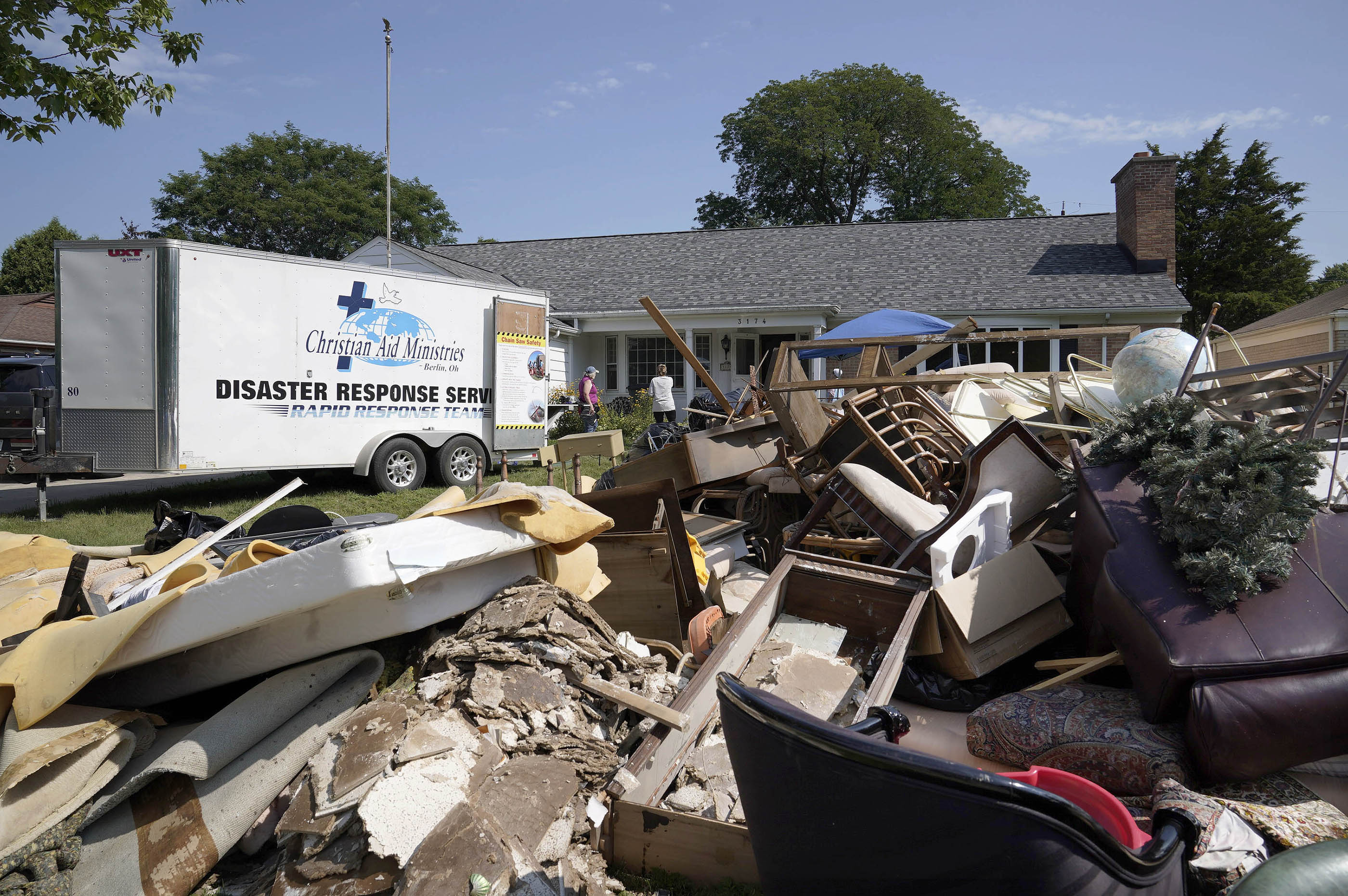
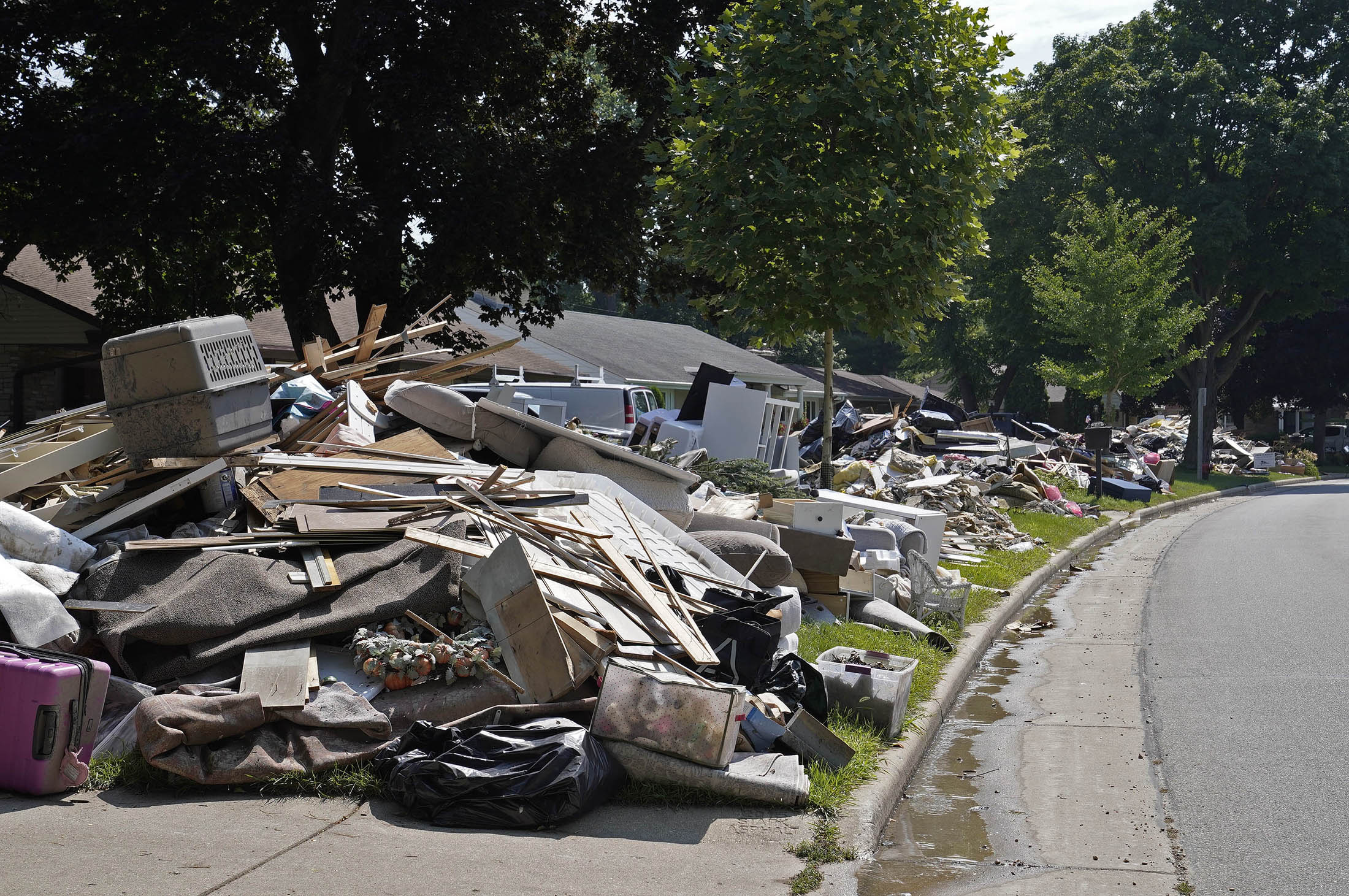
North of Burleigh Street, the Menomonee River Parkway divides into an east segment and a west segment. The east segment starts with the boundaries of the City of Milwaukee, but it becomes Wauwatosa north of Auer Street. The houses there sit on low-lying land nearly even with the undeveloped parkland across the street. In that parkland, the river runs, and on Aug. 10, the rising waters had nothing to stop them from spreading to the neighborhood's homes.
A similar scenario was playing out on the other side of the river, in the neighborhood known as Sheraton Lawns. There, the river normally runs to the east of the parkway, but as it rose, it crossed the street and began filling the basements and living spaces of the homes to the west.
"It was craziness," Tim Sumiec, a Sheraton Lawns resident, told Tosa Forward News. He replayed video on his phone from the morning of the flood showing the river expanding to encompasshis street and rise up his driveway nearly to his front door.
He and his wife, Jen, and their children worked to save as much as they could from the basement as it filled up thigh-high with water, but eventually they gave up and waited for the river to subside. After pumping out the water, they realized with shock how much was unsalvagable: Tim's work desk, a refrigerator, the washer and dryer, the furnace, and too many other personal items to list.
But on the fifth day of their cleanup efforts Aug. 14, the couple's main sentiment was one of gratitude, for all the friends and relatives who offered to help clear out the basement, take their laundry for cleaning, lend generators and pumps and generally provide moral support through such a challenging time.
"You can't survive this stuff without friends and family," Jen Sumiec said. "You only do it through your community."


